How to Stop Your Motorbike Drivers From Having Accidents
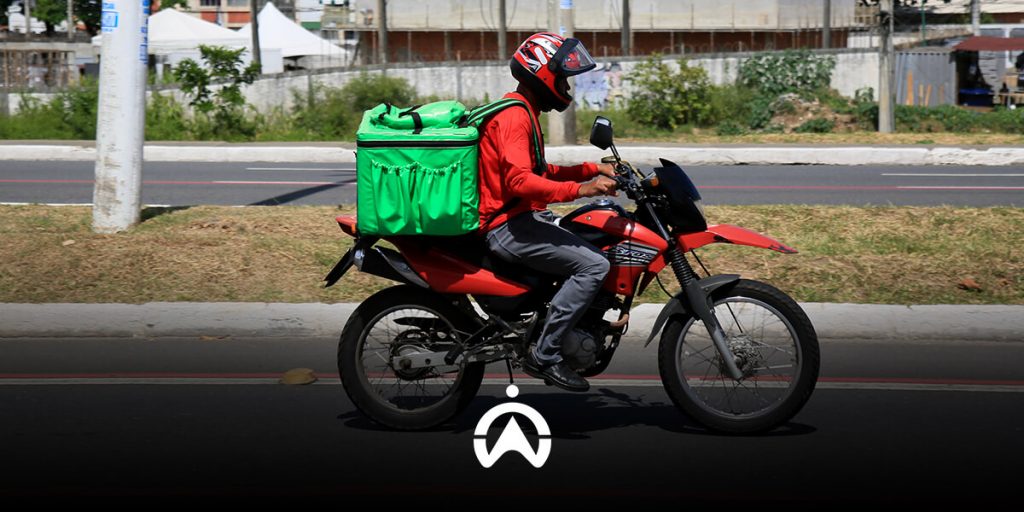
To stop bike drivers from having accidents, establish negligent driving habits, and roll out effective strategies to improve business and driver safety. Motorbike riders rank among the most vulnerable on the roads because riders are a whole lot more exposed and at risk out on the roads than the average car driver.
For fleet managers like yourselves, there’s a clear need for safety strategy and smart technology that anticipates risk rather than only reactive action. In this blog, we’ll look at useful steps and management techniques, as well as the role of fleet visibility tools provided by Cartrack that can help your business meet everyday safety objectives.
Practical ways to reduce motorbike accidents in your business
Practical ways to reduce motorbike accidents in your business include improving rider awareness & accountability, managing risk, and identifying risky driving patterns. Tackling the issues of negligence and accidents is all about a careful, consistent, step-by-step approach that solves the small issues before they turn into big ones.
Identify unsafe riding patterns early
Recognise those dangerous driving habits that are being repeated, including behaviours like consistent speeding and taking corners sharply. Nipping these habits in the bud, especially once they’ve turned into a pattern, lets you take proactive steps to avoid a costly reaction.
Rather act immediately and potentially save on time and expenses, than deal with the chaotic aftermath of an accident later.
Improve rider awareness and accountability
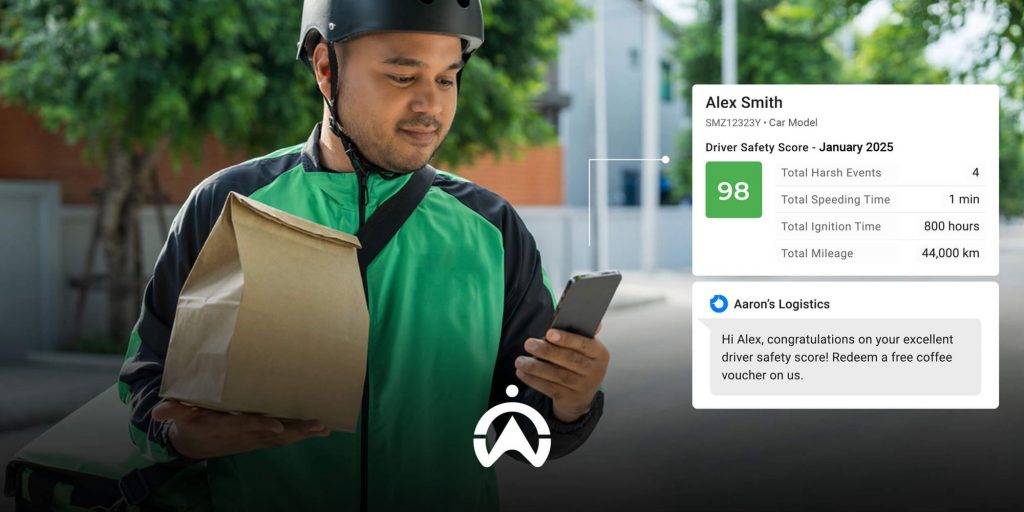
The most important thing to do is to approach corrective conversations and dialogue with coaching, not through punishment. This fosters better, more constructive growth among drivers and encourages them to quickly adopt safer driving habits. With recorded events and insights, you can also easily support your coaching efforts.
The key to maintaining safer habits is to do regular check-ins and coaching sessions when necessary.
Manage risk through smarter route planning
Smarter route planning involves preparing routes that avoid traffic congestion, high accident zones, and dangerous areas when possible to keep the drivers safe. This also eases the pressure of rushing deliveries, with drivers remaining realistic and prioritising safety without sacrificing efficiency.

Why are motorbike drivers at higher risk of accidents?
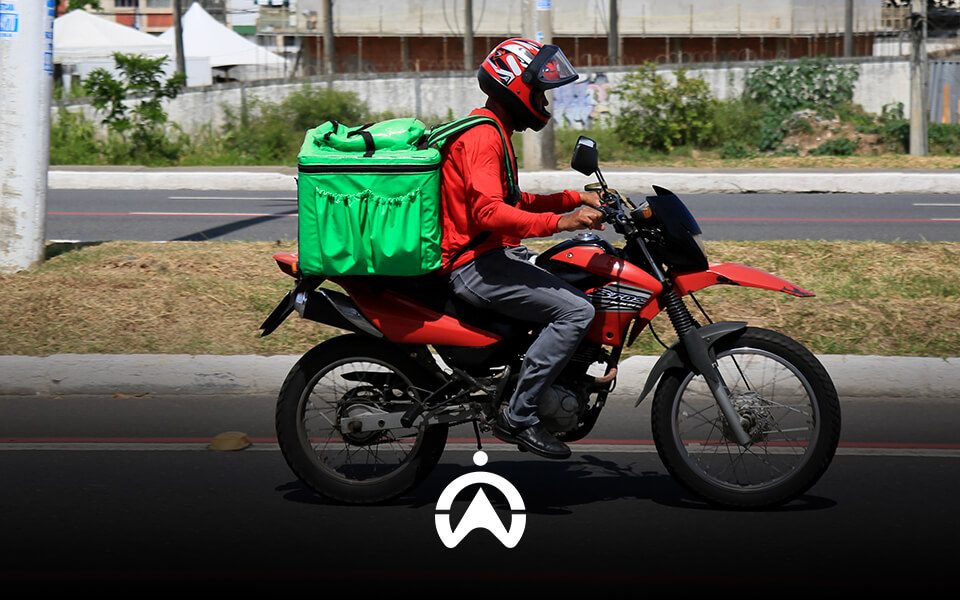
Motorbike drivers are at a higher risk of accidents because of their job demands and generally limited visibility while on the roads. Vehicle drivers might not notice bikers that are on the road or in traffic, potentially leading to collisions or violations of right-of-way. Plus, the pressure to make timely deliveries tends to increase dangerous driving habits.
These are some of the unique risk factors:
- Not being visible to other road users: Bikers are usually harder to see, especially because they’re operating a smaller vehicle, and can get caught in blind spots.
- Lack of physical protection: Bikers really don’t have much in the way of physical protection, especially for their bodies. This means that even the smallest accidents can cause significant damage.
- Urban delivery pressure and time constraints: Pressures to deliver on time, combined with congested routes, lead to bike drivers who perhaps feel like they need to take chances while on the road.
What are the most common causes of motorbike accidents in fleets?
The most common causes of motorbike accidents include factors like limited visibility and distracted driving.
Here are some of the most frequent explanations:
- Speeding and aggressive manoeuvres: This is a result of the pressures of timely deliveries, meeting customer expectations, and ducking and diving through heavy traffic.
- Poor danger anticipation: This is because of blind spots and tricky, high-accident areas like four-way stops.
- Distraction and fatigue: This is because motorbike drivers typically work long hours; that, paired with intense pressure to deliver and meet growing customer demands, can lead to dangerous events.
- Poor route planning and unsafe delivery zones: These are the biggest contributing factors for motorbike riders finding themselves in very high-risk areas and situations.
What does defensive driving look like for motorbike riders?
Defensive driving for motorbike riders looks like always staying alert. Riders must ensure others can see them, and they must anticipate potential risks by scanning the road ahead, positioning themselves wisely in their lane, and maintaining a safe driving distance. Defensive driving for motorbike drivers is a unique strategy, because a two-wheel drive needs to tackle its own unique concepts.
These concepts include:
- Space and escape routes: It’s always important that the motorbike driver keep 3-6 seconds between themself and the vehicle in front of them. A good trick is for them to pick a fixed object and start counting when the car ahead goes by. If they reach that object in less than 3 seconds, they’re too close or speeding.
- Anticipating driver blind spots: Motorbike drivers should always assume that they’re not clearly seen by other drivers, especially because they’re usually caught in vehicle driver blind spots.
- Reading traffic patterns early: Much like the first point, this is about your motorbike drivers staying aware and alert while on the roads. It’s important they slow down at turns or when trying to switch lanes, and avoid sudden movements to keep themselves and other drivers safe.
The motorbike safety triangle: Rider, route, and real-time visibility
The motorbike safety triangle relies on the 3 connected factors: rider, route, and real-time visibility. The chances of an accident increase when one of these factors breaks down. Motorbike fleets that combine these 3 factors ultimately move from reactive incident management and shift to a preventative safety strategy, lowering the chances of road dangers.
Safety should be an ever-evolving and dynamic system that values your business and riders, not a one-time session that fails to grow with you.
Let’s take a look:
- Rider: behaviour, skills, and decisions
Motorbike riders are the biggest wild card when it comes to safety. It’s all about their awareness, reaction times, and ability to respond with a clear head in an emergency. The key with motorbike drivers is to nip bad driving habits in the bud. As a fleet manager, always focus on gentle guidance instead of harsh discipline.
- Route: exposure to risk on the road
In the end, it won’t matter how safe and skilled your motorbike drivers are if the routes they’re taking are not optimised for safety and efficiency. The risks that present themselves, including blind spots, traffic jams, and pressures to deliver on time, are all factors that increase the chances of an accident happening.
Carefully planning and maximising routes improves overall safety, keeping your motorbike riders much safer and helping them make better, wiser decisions throughout the day.
- Real-time visibility: the insight that ties everything together
Live and consistent visibility brings together rider behaviour with route risk, creating a simple, controllable system. Thanks to driver behavioural insights and standard data, you can identify patterns and problems early and intervene before they worsen. This is about ensuring fair accountability and offering informed support, not about helicopter managing.
How technology helps prevent accidents before they happen
Technology helps prevent accidents before they happen by giving you, the fleet manager, the ability to carefully monitor and collect insights into rider driving behaviours. These extensive insights allow you to enact preventative measures way before the accidents happen, protecting your riders rather than dealing with the fallout of an unfortunate and dangerous event.
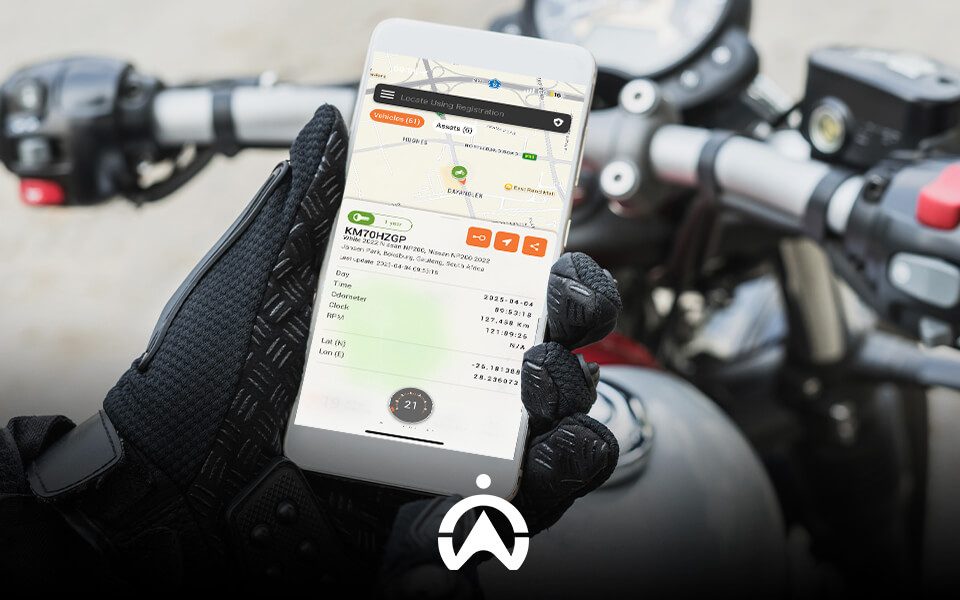
Technology strongly supports a better safety environment rather than creating an imposing policing tool. Live GPS tracking features not only allow you to see where each motorbike and rider is at any time, but can also assist in route optimisation and task redirection if necessary. Decisions are made on the fly without pressure or uncertainty.
As previously mentioned, driver monitoring features give much-needed context to rider behaviours. Repeated dangerous habits can be quickly addressed through training and coaching—before they morph into something potentially fatal.
Compliance features can also have their hand in prevention through providing reliable information for investigations or insurance disputes. Plus, they foster a culture where safety expectations are clear and continually upheld.
Motorbike safety without data vs motorbike safety WITH data
When looking at motorbike safety without data versus motorbike safety with data, you’ll clearly see that data is the key to achieving optimal safety—especially from a preventative angle. Without data, you’re left in the dark, relying on only what you see and learn after a dangerous incident has occurred.
Look at the comparison below to better understand how each approach differs:
How Cartrack supports safer motorbike fleets
Cartrack supports safer motorbike fleets by offering the appropriate technology and tools to ensure you improve and maintain that safety. We gather the necessary insights, interpreting and transforming them into measurable feedback so you can gain better control across your fleet.
Our driver behaviour tools show you how your motorbike riders are behaving on the roads, keeping track of their habits and locations. This means you can keep an eye on their movements (and see if they’re travelling in and out of high-risk areas) while also checking if they’re driving aggressively. This fosters honest, fact-driven conversations and promotes safer habits without making assumptions.
Our insights regarding routes and their potential risks help your fleets reduce unnecessary exposure. By detecting gridlocked areas, areas that are high risk, and poor routes, Cartrack can lessen the pressure on your riders and help them to avoid accident-prone areas.
Finally, our comprehensive reporting brings data together in a simple and digestible format for you. Information that’s clear means that you can make better and more informed decisions while also strongly backing any changes and coaching methods you make going forward. And should an incident occur, you have the right, precise documentation in place to support insurance claims and investigations.
Through Cartrack, you can cultivate a working environment that embraces a supportive safety culture for your riders, steering clear of harsh control and micromanagement.
Final takeaway: Safety is a system, not a single rule
Preventing motorbike accidents isn’t about putting all your eggs in one basket and relying only on one policy. It involves the right behaviours from riders, careful planning from managers, and total visibility—all working together every day. With these multiple factors combined, risks will be identified sooner, and the number of accidents will decrease significantly.
Cartrack promotes safer and more responsible operations of motorbikes by supplying businesses with insights that help maintain control without the need for micromanagement. The result of this approach is a fleet that operates more safely and efficiently, and with increased accountability for both riders and managers.
Build a safer motorbike fleet for your business. Talk to our team and start reducing rider risk with proactive monitoring and alerts.