Contact us today for your fleet and tracking solution
What is Short-Haul Trucking?
Short-haul trucking is the transportation of goods via truck, over distances that are comparatively shorter than those of long-haul trucking. Usually, it refers to truck transport over distances of between 100km to 250km, which would usually be within the Eswatini province or between two provinces.
Data from the Road Safety Council of Eswatini (RSCE) highlights that a significant percentage of fatal accidents in the Kingdom involve pedestrians, particularly as short-haul trucks navigate the busy urban and rural stretches of the MR3. Reducing these accidents without compromising on delivery speed is possible through the use of AI-powered Advanced Driver Assistance Systems (ADAS). These tools provide real-time proximity alerts for pedestrians and livestock, allowing drivers to maintain their schedules safely and helping your business align with the National Road Safety Strategy’s goal of halving road deaths by 2030.
In this blog, Cartrack will do more than answer the question, “What is short-haul trucking?” We’ll create a comprehensive industry guide and help you develop your own short-haul trucking operations to make it more profitable, more reliable, and more efficient.
What does short-haul trucking refer to?
Short-haul trucking in Eswatini refers to any truck-driven transportation that covers less than 300 kilometers. It’s a huge and important industry that includes last-mile deliveries, retail distribution, and manufacturing supply. Construction and infrastructure logistics are also included as industries that rely on short-haul trucking, as well as the all-important cold-chain logistics that regularly supply our retail stores.
How does short-haul trucking differ from long-haul trucking?
Short-haul trucking differs from long-haul trucking in distance, duration, and usually the type of truck used. Those large trucks you see on cross province highways are usually driven by long-haul truck drivers, while short-haul trucks often (but not always) use smaller vehicles.
Distance
Long-haul trucking usually covers long distances that cross from one province to another. Sometimes they even cross the border into neighbouring African countries. More often than not, short-haul truck drivers remain within their province and distribute goods to destinations that are relatively close.
Duration
A big difference between long-haul trucking and short-haul trucking is how long it takes for the delivery to happen. Long-haul truckers often work long, taxing hours navigating the road, which is why you might see them parked on the side of a highway sleeping or eating before moving again.
Vehicles
Because logistics companies want to get as much of their goods from one place to another (in order to save on fuel), long-haul truck drivers often work with large, heavily-loaded trucks. Short-haul truckers do too, but it’s more common for them to drive smaller trucks that carry fewer goods.
Regulations
Both long-haul & short-haul truck drivers must adhere to appropriate regulations respectively that might differ slightly. For example, long-haul truckers might have to pack and secure their loads in a certain manner, whereas short-haul truckers are travelling short enough distances to be less strict in this regard.

A day in the life of a short-haul trucker
A day in the life of a short-haul truck driver comes with its own unique set of perks, challenges, and nuances. It’s different for everyone, but most must work long hours that start early and end late. They also have various responsibilities that relate to their vehicles, their driving behaviour, and their deadlines.
What are the challenges faced by short-haul truck drivers?
The next time you see a short-haul truck driver on the road, consider the challenges they deal with on a daily basis:
- Truck maintenance and road compliance
- Tight deadlines for reaching their destinations (without breaking road laws)
- Keeping the condition of their cargo in good shape
- Ensuring vehicle security when parked
- Navigating multiple stops in a single day
- Dealing with traffic and the worsening road infrastructure
How is technology shaping the short-haul truck industry?
Fleet management companies have attempted to address many of these problems, and Cartrack has managed to come to the forefront of solving them ALL. Technology (in the form of telematics, AI-powered fleet software, and IoT (internet of things)) is evolving fast, and we’re the company in Eswatini that’s driving it!
Just look at the ways we’ve made short-haul truck driving more efficient, safer, and more profitable:
- Cartrack has developed predictive maintenance scheduling to keep short-haul trucks in peak condition, reducing downtime, reducing fuel use, and increasing overall vehicle efficiency.
- We’ve developed the most refined route optimisation software that takes traffic, road conditions, and temporary roadblocks into account.
- Our vehicle security cameras keep an eye on your cargo, automatically switching on and off based on your settings (whether the door is open, whether the vehicle is running, etc.)
- Cartrack’s temperature monitoring sensors are made for short-haul trips where perishable goods are transported.
- Our vehicle cameras come with a “parking mode” setting, switching on automatically if the cameras or your vehicle is tampered with.
- Short-haul truck owners will love our fuel management software that tracks fuel use and enables you to make changes that can save up to 24% of your fuel expenses.
Now imagine having these features for your own short-haul truck company. Imagine the increase in profits, the satisfaction of your drivers, and the improvement in your reputation in the eyes of your customers!
Give us a call to discuss the implementation of these features for your short-haul fleet.
Why is short-haul trucking vital to Eswatini’s economy?
Short-haul trucking is vital to Eswatini’s economy because it forms the backbone of construction, infrastructure, and last-mile delivery. It’s short-haul trucks that stock our retail stores, deliver essential materials for building, and deliver our online store packages. Without this vital chain in supply, our economy would come to a virtual standstill.
It’d be difficult to think of an industry in Eswatini that isn’t supported by short-haul trucking. But for the purposes of this read, let’s just look at a few.
That last-mile connection
That online shopping you do is a drop in the ocean compared to the myriad industries that rely on last-mile deliveries. This is the final part of any delivery before it reaches the end consumer, and includes retail, manufacturing, printing, cold-chain, appliances, and many more.
The short-haul EV experiment
The interesting thing about short-haul trucks is that they’re the perfect sector for electric vehicle experimentation. Why? Because the distances are relatively short, and troubleshooting can be dealt with much easier.
EV trucks are being seriously considered for future short-haul trucking. At this point, small delivery scooters and electric bikes are being used to completely bypass fuel costs. Can you imagine the savings if this could be extended to small & large trucks as well?
Small trade companies
Plumbers, electricians, roof repairmen, and other trades rely on short-haul trucking for their supplies, materials, and even their tools. Can you imagine how your area would come to a standstill if there was no one to fix the essentials at your home?
Tips for short-haul truckers in Eswatini’s demanding work environment
At Cartrack, we talk to truck drivers of all kinds. We listen. We learn. We put ourselves in their shoes. As fleet software developers. We’re always trying to make their lives easier & safer, while optimising the operations side of things for their managers too.
Here are some tips for short-haul truck drivers (and the hard-working individuals who manage them):
Tip #1: Focus on strategic route planning rather than speed
Tip #2: Stay safe and drive responsibly
Tip #3: Know your vehicle and how to keep it in good condition
Tip #4: Prepare by being well rested and nourished
Strategy vs speed
A map application on your phone can give you the quickest route to a destination. But only route optimisation software gives you time-based, road-based, and event-based route optimisation that’s applicable to each driver while they’re working.
Responsible driving
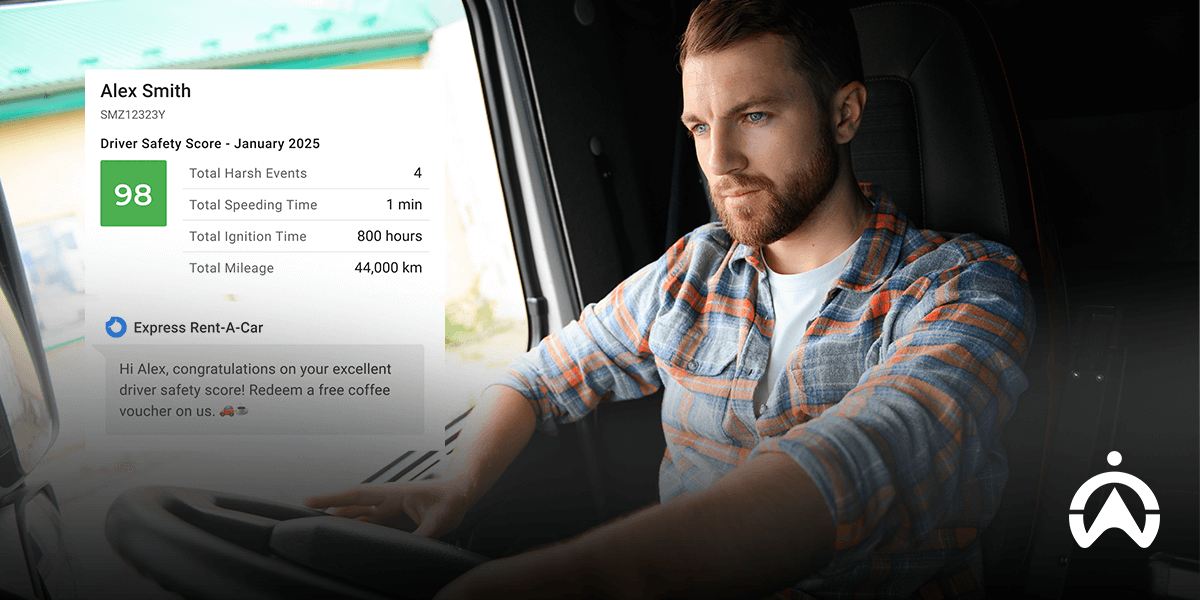
Cartrack has simplified driver coaching with AI cameras and GPS tracking that detects little things like:
- Harsh cornering
- Sudden braking
- Distracted driving
- Seatbelt use
- Fatigue
If you see a gap in the way you drive your short-haul truck, your managers can focus their training based on the things you struggle with most.
Vehicle health
AI has come a long way to make vehicle maintenance a much easier task. A calendar app can schedule short-haul truck maintenance, but only fleet software coupled with AI can PREDICT when a vehicle needs its next service.
Driver health
You’ll be the best version of yourself if you’re well-rested and energised for the day. Eat a nutritious meal before starting your day, and always ensure you go to bed at a reasonable time. Remember that eating, drinking, smoking, and nodding off have no place in the worklife of a truck driver. Stay safe out there, and if possible, rely on technology that detects these warning signs and warns you while you’re driving.
Partner with the company that keeps driver safety and vehicle health a priority. Consultants are standing by to help you develop the perfect FMS package for your fleet.