Get AI Cameras for Seatbelt and Phone Detection for Drivers
Getting AI cameras for seatbelt and phone detection for drivers is the perfect way to transform safety protocols in your fleet. AI detection can monitor poor driving habits, alert drivers so they can quickly correct their actions, and keep records of offences so you can coach your drivers if they repeatedly commit them.
It has been consistently highlighted by the Eswatini Ministry of Public Works and Transport, alongside local road safety councils, that human behaviour such as mobile phone distractions and reckless driving remains the primary reason for road accidents on the Kingdom’s roads. To combat and align with the country’s Eswatini Road Safety Strategy 2023-2030, implementing smart technologies and cameras is the best way to stop simple, preventable habits from becoming major financial hits to your business.
Don’t get caught without the right safety measures in place. Learn more about seatbelt cameras, the importance of AI in detecting distractions, and how Cartrack Eswatini can give you the ultimate safety boost.
How do AI cameras work to detect seatbelt and phone use?
AI cameras work to detect seatbelt and phone use by tracking and tracing the actions of the driver and, in some cases, the passenger. The AI component of camera technology is responsible for flagging violative actions, analysing the flagged images and videos, recording them as an offence, and notifying the driver & fleet manager.
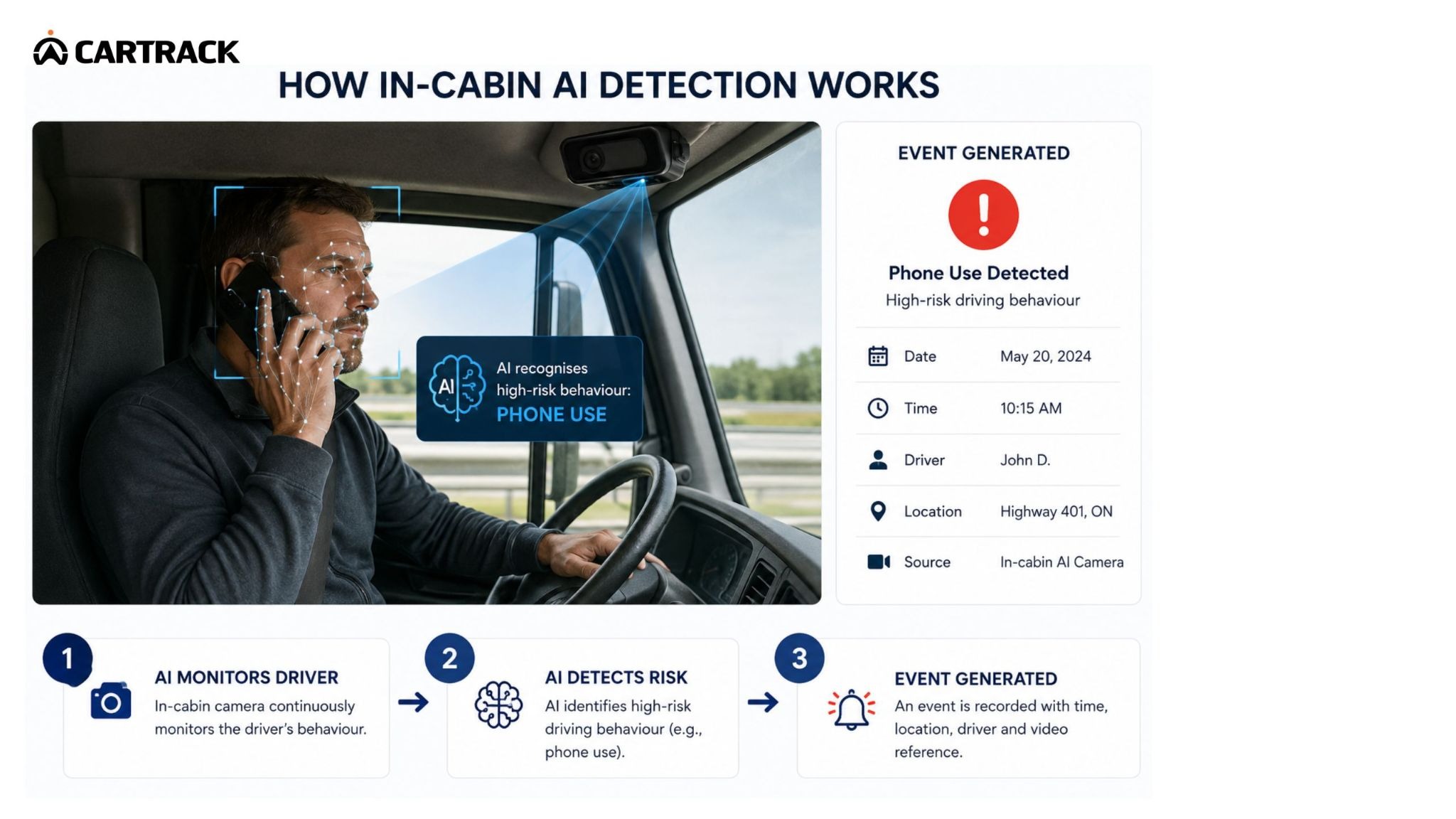
A typical in-cabin AI detection system works by identifying high-risk driving behaviours and generating an event. For example, if your driver is on the road and they bring their phone up to their ear for a call, AI will recognise that as phone use and record it as an event.
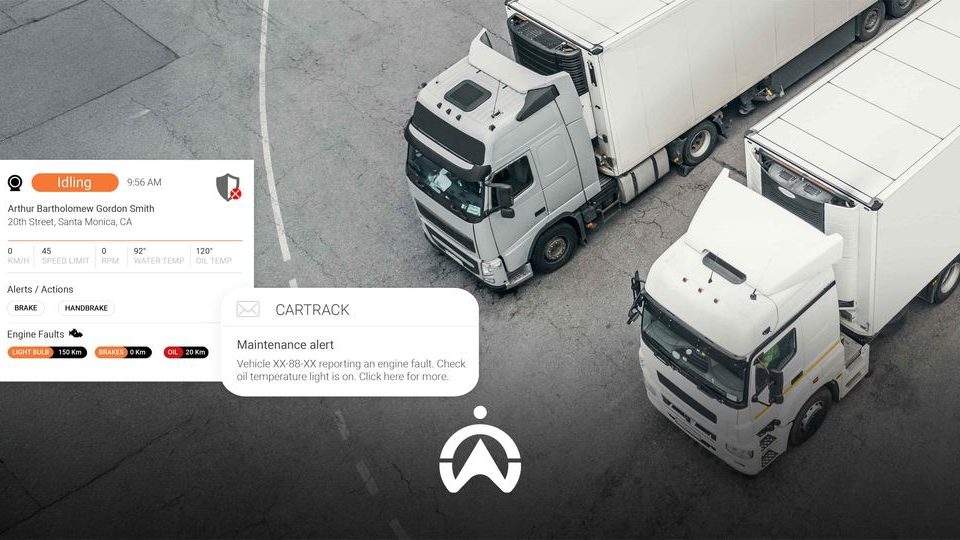
Here’s an illustration to give you an idea:
It’s understood that AI doesn’t always get it right. AI is still a computer, and computers recognise patterns rather than specific situations in context. The wrong lighting or an everyday object could mess with the AI’s ability to process an image or just confuse it for something else.
While this may be the case, this technology continues to develop and progress every day.
Rather err on the side of caution and make sure your safety measures are up-to-date than risk a vulnerable fleet.
Why are fleets using AI technologies for distraction detection?
Fleets are using AI technologies for distraction detection because they want to move from reactive to proactive safety management. This move also allows you to empower yourself and your team, confident that innovative tech is keeping you ahead and compliant.
Here are some significant reasons fleets adopt AI technologies:
Proactive safety management
While standard dashcams are perfect for capturing what happens on the road and inside the cabin, they don’t take the extra necessary safety step that AI cameras do. AI cameras take away the need for you to carefully watch hours of footage just to see how your drivers behave on the road.
Insights-first approach
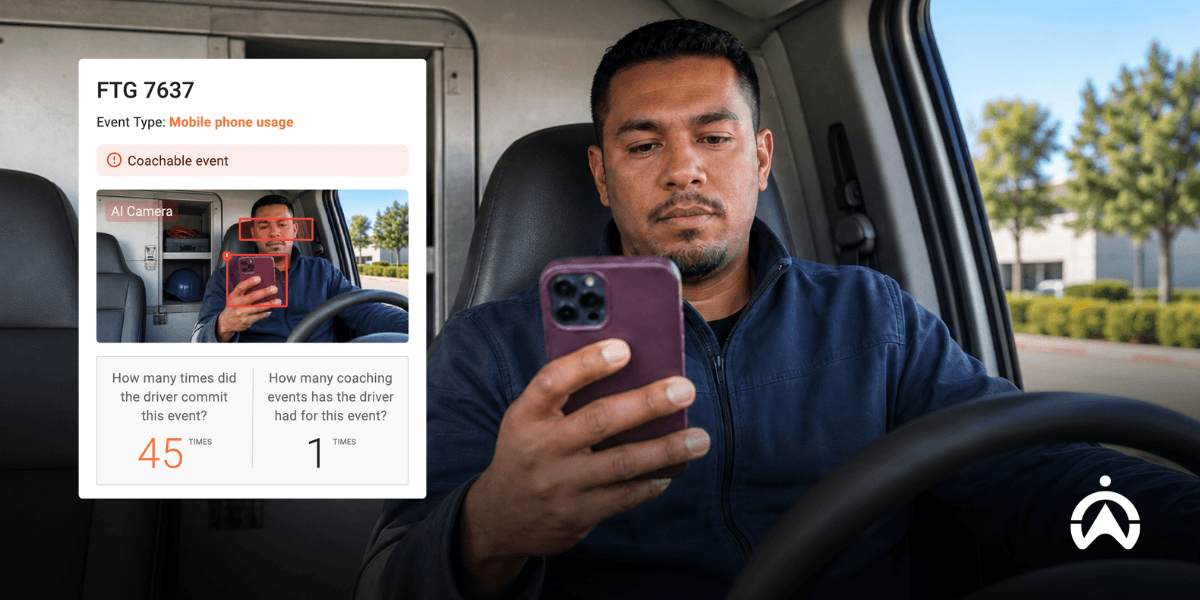
Because AI cameras produce automated reports of events for each driver, you can train your drivers based on their specific high-risk habits. Individualised critiques and training will likely yield better results, rather than a broad, blanket training approach.
Fewer concerns regarding legal matters
With AI cameras triggering event alerts as they happen, this means drivers can correct their actions in real time. This minimises the chances of incidents and accidents, positively snowballing into better insurance rates and fewer legal issues.
Driver retention
When you’re taking every measure possible to ensure your drivers are safe and looked after, they understand that they’re valued as employees. You’re showing them that you’re interested in their safety, well-being, and growth. This kind of careful investment can increase driver retention, keeping drivers loyal to your business.
Protect your fleet: Does Cartrack Eswatini offer AI cameras for seatbelt and phone detection?
Yes, Cartrack Eswatini does offer AI cameras for seatbelt and phone detection. In fact, our AI technology extends beyond that, monitoring and keeping a record of:
- 🥱 Fatigue (yawning, eyes looking away or closed for too long)
- ✋ Covering the cabin camera
- 🚛 Speeding
- 🚚 Front collision (measuring the distance between your driver’s vehicle and the vehicle ahead of your driver, because if the vehicles are too close, an alert will be sent to help avoid a potential crash)
- 🚭 Smoking
Drivers are audibly alerted in real time so that they can quickly correct their transgression.
What’s more…
As part of our AI camera offerings, you can get up to 8 external cameras to monitor spots around your fleet vehicle and cargo doors. You’ll also be able to livestream footage so you can check in on your drivers and also view or request footage.
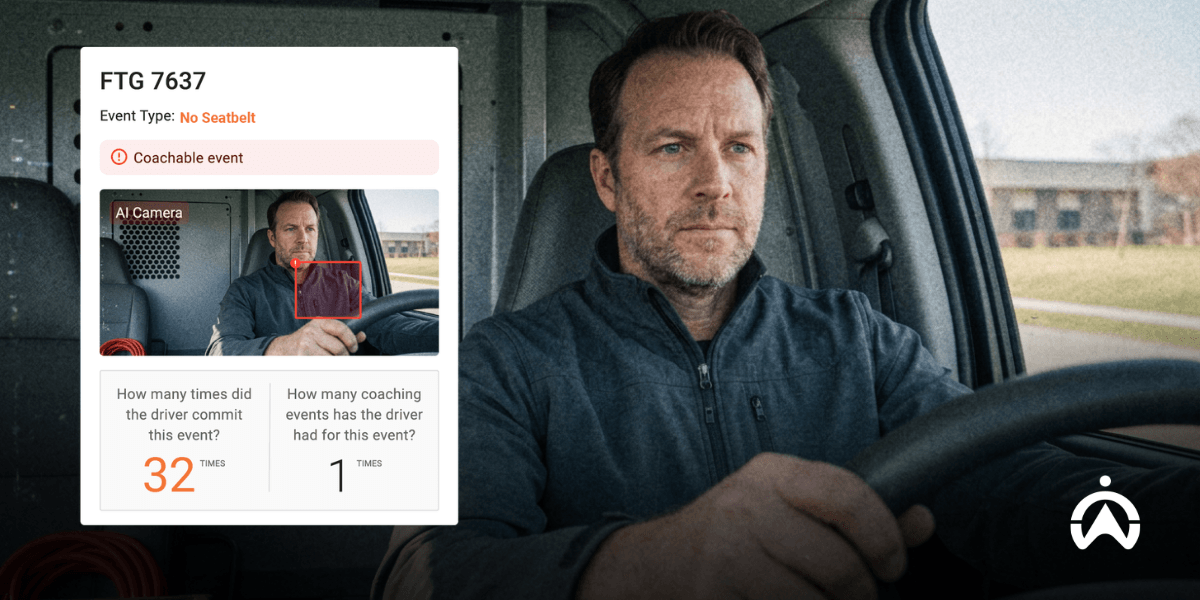
Cartrack’s in-cabin system ALREADY consistently reminds your drivers to buckle up and stay off their phones. So, when it’s time for the government-implemented seatbelt cameras to roll out, your fleet will be fully compliant and steering clear of any fines.
Final takeaway: The ultimate safety net
Eswatini is taking a huge leap forward in road safety. With the number of fatalities that occur on our roads each year, it’s no wonder the country is looking towards intelligent technologies to promote preventative actions and accountability for drivers. But while the country waits for the legal go-ahead, you can take safety matters into your own hands.
Cartrack Eswatini gives you the power to implement seatbelt, phone, and other distracting-habit detections through our AI-powered camera solutions. You can stay ahead in protecting your team, your assets, and your company’s reputation—all from one platform.
Don’t allow blind spots in your fleet. Speak to a Cartrack Eswatini consultant today to see how we can protect your fleet and its most precious assets, one kilometre at a time!
Frequently asked questions about seatbelt and phone detection
Can I get points for not wearing a seatbelt?
No, you can’t get points for not wearing a seatbelt in Eswatini. Instead, seatbelt violations are strictly penalised with spot fines as stated under the Road Traffic Act of 2007. Everyone in the car is expected to be wearing a seatbelt. The fine amount varies but could increase depending on the offence.
Can mobile phone and seatbelt detection cameras detect if I am adjusting the volume of my music?
No, mobile phone and seatbelt detection cameras can’t detect if you’re adjusting the volume of your music. They’re meant to detect cell phones in your hand or in obvious areas, like resting in your lap. It’s important to mention that AI detection technologies can make mistakes, and if it flags, a reviewer can dispute that detection.
How can I prove drowsy driving?
To prove drowsy driving, you must:
- Collect all circumstantial evidence (photos, dashcam footage, and witness statements), because proving exhaustion can be tough
- Use the police report, which will hopefully include the investigating officer’s examination
- Rely on expert witness feedback based on incident reconstruction
- Get medical records if necessary